

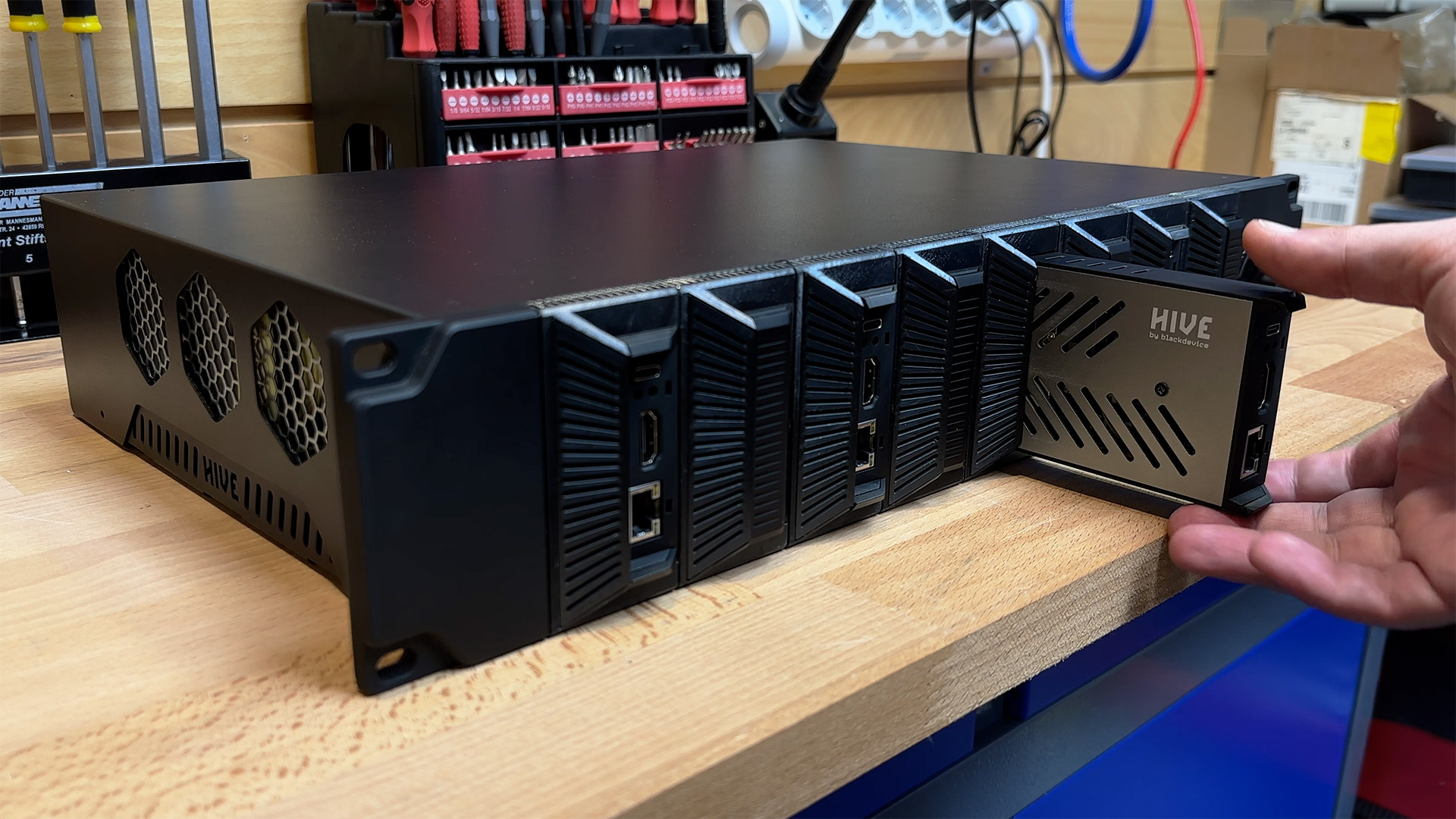
Hive mechanical design evolution. Raspberry Pi compute platform
Not long ago, we shared a look at one of our earliest Hive prototypes after it returned to our workshop for a final pit stop before heading to a new datacenter. That system had spent more than a year running in production, and taking it apart gave us something even more valuable than a successful deployment: perspective.
From prototype to product: how Hive keeps evolving
In that article, we reflected on the mechanical design decisions that had served us well, the ones that hadn’t, and the lessons they taught us about building a professional Raspberry Pi compute platform.
If you haven’t read it yet, it’s the perfect place to start: What we learned from our first Hive prototype
Today, we want to continue that story. Because every prototype exists for one reason: to make the next one better.
The second prototype isn’t just an update
At first glance, the new prototype looks like a natural evolution of the previous one. In reality, it’s the result of rethinking some of the most fundamental aspects of the platform.
One of the biggest lessons we learned from the first prototype was that a product isn’t defined only by whether it works. It’s also defined by how easy it is to manufacture, assemble, maintain and use every single day.
Those aspects rarely appear in a specification sheet, but they often determine whether a design is ready to become a real product. That mindset has guided almost every decision behind this new version of Hive.
A new rail system that changed everything
The most significant redesign came from something that initially looked like a relatively small mechanical problem.
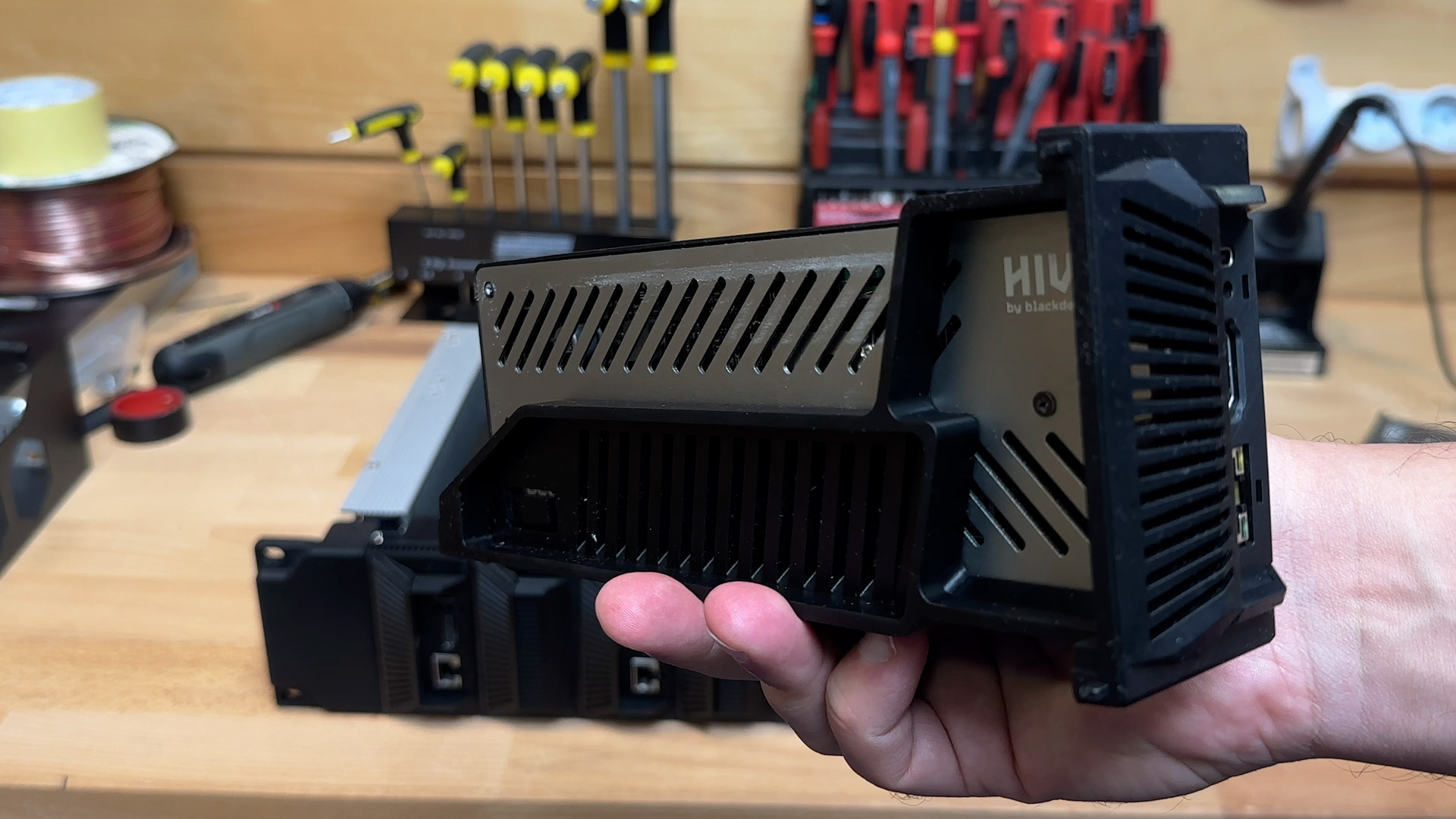
In our previous prototype, the node guidance system relied on rubber inserts sliding inside metal rails. The concept worked, but soon we realised that insertion could be more precise, assembly could be simpler, and the overall hot-swap experience could feel much more robust.
Rather than trying to improve the existing mechanism, we decided to start again. The result is a completely new rail system.
Each beenode now slides on its own dedicated rail, remaining accurately aligned from the moment insertion begins until it reaches the backplane.
The result is a smoother and far more predictable insertion process. But the most interesting part wasn’t the improved user experience. It was everything else that this redesign made possible.
See the new prototype in action
Photos are great for highlighting specific details, but some engineering decisions are much easier to understand when you can see the system in motion.
If you’d like a closer look at the new rail system, the modular architecture and the design decisions behind this prototype, we’ve documented the entire analysis in the video below.
It complements this article by showing the mechanisms in action and explaining the reasoning behind each major improvement.
Solving one problem created a new architecture
The new rail system quickly became much more than a guidance mechanism. It became the structural foundation of Hive itself.
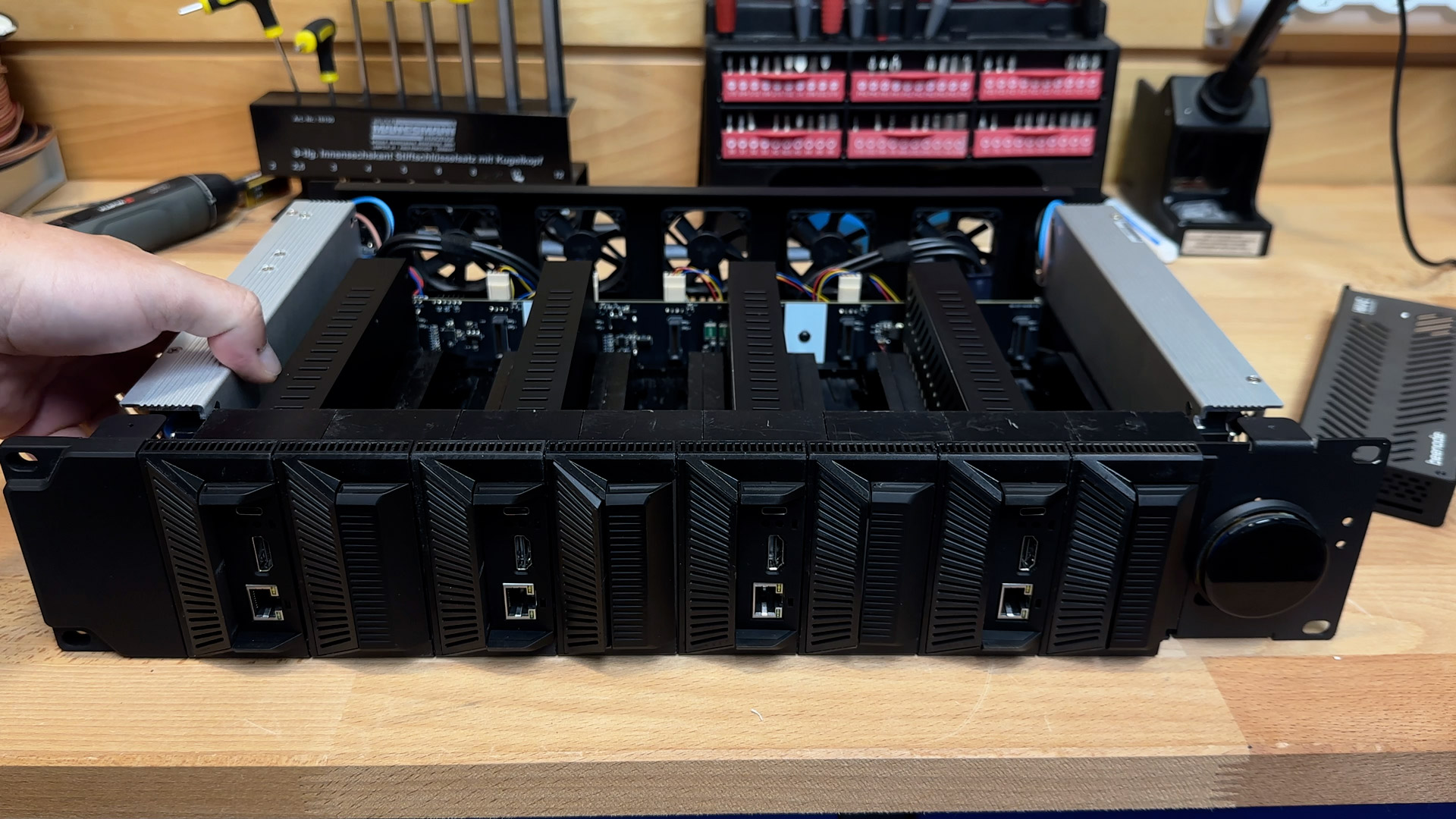
Each rail is now an independent module that locks together with the next one, allowing us to build the chassis using the same mechanical building block.
With four modules, we create Hive Mini. With eight, we create the full-size Hive.
Instead of designing two completely different products, we designed a single modular architecture that naturally scales across the entire platform.
That decision doesn’t just simplify manufacturing. It also makes future development significantly easier.
Industrial design Is also about airflow
Good industrial design goes far beyond aesthetics. Mechanical components influence how the entire system behaves.
The new rail architecture naturally creates dedicated airflow channels around every beenode.
Fresh air enters through the front of the chassis, passes across each compute module and is extracted by five rear fans, creating a much cleaner and more predictable cooling path.
The platform also incorporates dual redundant power supplies, another design decision aimed at making Hive feel much closer to professional infrastructure than to a traditional DIY Raspberry Pi cluster.
Many of these decisions aren’t immediately visible from the outside, but they’re the result of hours spent thinking about reliability, manufacturability and long-term usability.
Prototypes exist to reveal problems
One of the biggest mistakes in product development is believing that every prototype should be perfect. That’s never been our objective. This second prototype has already revealed several small details we’d like to improve.
For example, we’ve already redesigned the blank front covers to achieve a more precise fit while preserving airflow and maintaining the modular nature of the chassis. We’ve also simplified several other front-panel components to reduce manufacturing complexity.
Inside the chassis, we’ve repositioned power and fan connectors to keep the airflow path cleaner, and we’ve refined the beenode enclosure to eliminate small mechanical tolerances that only became obvious after assembling and handling the system repeatedly.
None of these changes fundamentally alter the platform but, together, they make it noticeably better. And that’s exactly why we build prototypes.
Every iteration brings Hive closer
Looking back at both prototypes, it’s clear that the project has evolved in ways we couldn’t fully anticipate when we started.
Some improvements came from engineering calculations. Others only became obvious after physically assembling the hardware, inserting and removing nodes dozens of times, routing cables or simply living with the product during development.
That’s why we enjoy sharing this process publicly.
We believe the engineering journey is just as interesting as the finished product, and we hope these articles help illustrate how much thought goes into every design decision.
While this prototype has already validated most of the platform’s mechanical architecture, we’re already assembling the next revision. Most of the remaining changes are now relatively small refinements, which is an encouraging sign that we’re getting very close to the product we originally envisioned.
Very soon we’ll be sharing both Hive Mini and the full-size Hive running together, alongside the software platform that ties everything together.
Join us as we build Hive
If you’ve been following Hive from the beginning, thank you! And if you’ve only just discovered the project, welcome.
We’re documenting the entire journey, from early concepts and engineering challenges to manufacturing, software and real-world deployments, and we’d love for you to be part of it.
🐝 Join the Hive community and receive exclusive updates:
👉 https://hive.blackdevice.com
You can also subscribe to our YouTube channel, where we regularly publish behind-the-scenes videos, engineering deep dives and prototype updates as we move towards our Kickstarter launch this autumn.
The best part of building Hive in public is the conversation around it.
So if you have questions, ideas or features you’d like to see, we’d genuinely love to hear from you.
Hive is launching on Kickstarter. Are you in?
Get on the early bird list and get exclusive access before anyone else
You’ll receive a confirmation email. Please check your spam folder if you don’t see it.
What you’ll get: project updates as we build – launch alert the moment it’s live – your exclusive early bird link. No spam. Leave anytime.