

What we learned building a Raspberry Pi cluster, and how those lessons shaped Hive
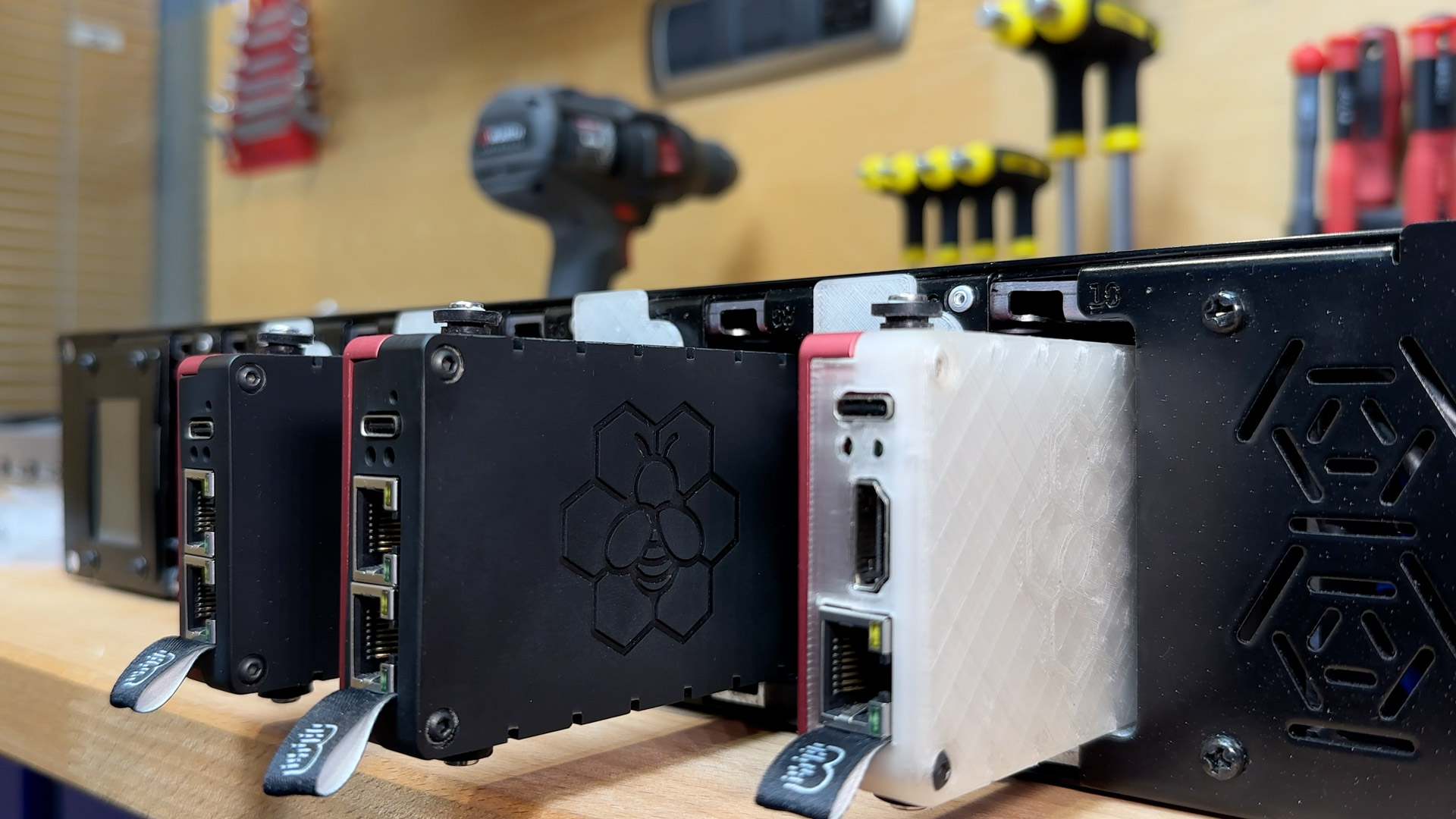
Recently, an old prototype came back home.
If you’ve been following the project for a while, you may recognize it. A year ago, we introduced this system and documented its deployment at Ipglobal, where it would spend the following months quietly doing exactly what we had built it to do.
If you missed that stage of the project, check out this teaser video we published on our YouTube channel
Back then, we were exploring the idea of a distributed computing platform built around Raspberry Pi Compute Modules. Many of the concepts that define the project today were already there.
Recently, the IT team sent that prototype back to us for a quick pit stop before moving it to a new datacenter. We had to perform some updates to it before its next deployment, but having it back in the workshop felt like much more than that.
It gave us the chance to revisit a machine that had spent more than a year in production and ask ourselves a simple question:
What did it teach us?
First, the good news
Before talking about what we wanted to improve, it’s worth talking about what worked.
Because that’s the reason this story exists in the first place.
Architecture worked.
Node-to-backplane connection held up remarkably well. The electrical design proved to be robust, and after more than a year of operation, we found no significant deterioration in the core system. Nodes still connected reliably and the backplane continued doing its job exactly as intended.
Most importantly, this prototype validated something much bigger than a collection of PCBs and mechanical parts. It validated the concept.
At that point, we stopped looking at the project as an interesting experiment. We had proof that the idea made sense and that it deserved to keep evolving.
The question was no longer whether we should continue. It was how to make it better.
Complexity accumulates
Looking back, most of the improvements we wanted to make had a common origin. Complexity.
Like many prototypes, this system prioritized functionality. We solved problems as they appeared and built mechanisms that allowed us to move quickly and validate ideas.
That approach worked. But after living with the system for a year, we started noticing all the small details that add friction:
- more parts
- more screws
- more manual assembly
- more opportunities for tolerances and wear
Enough to realize that simplicity wasn’t just desirable. It was necessary.
 The rail system taught us that user experience matters
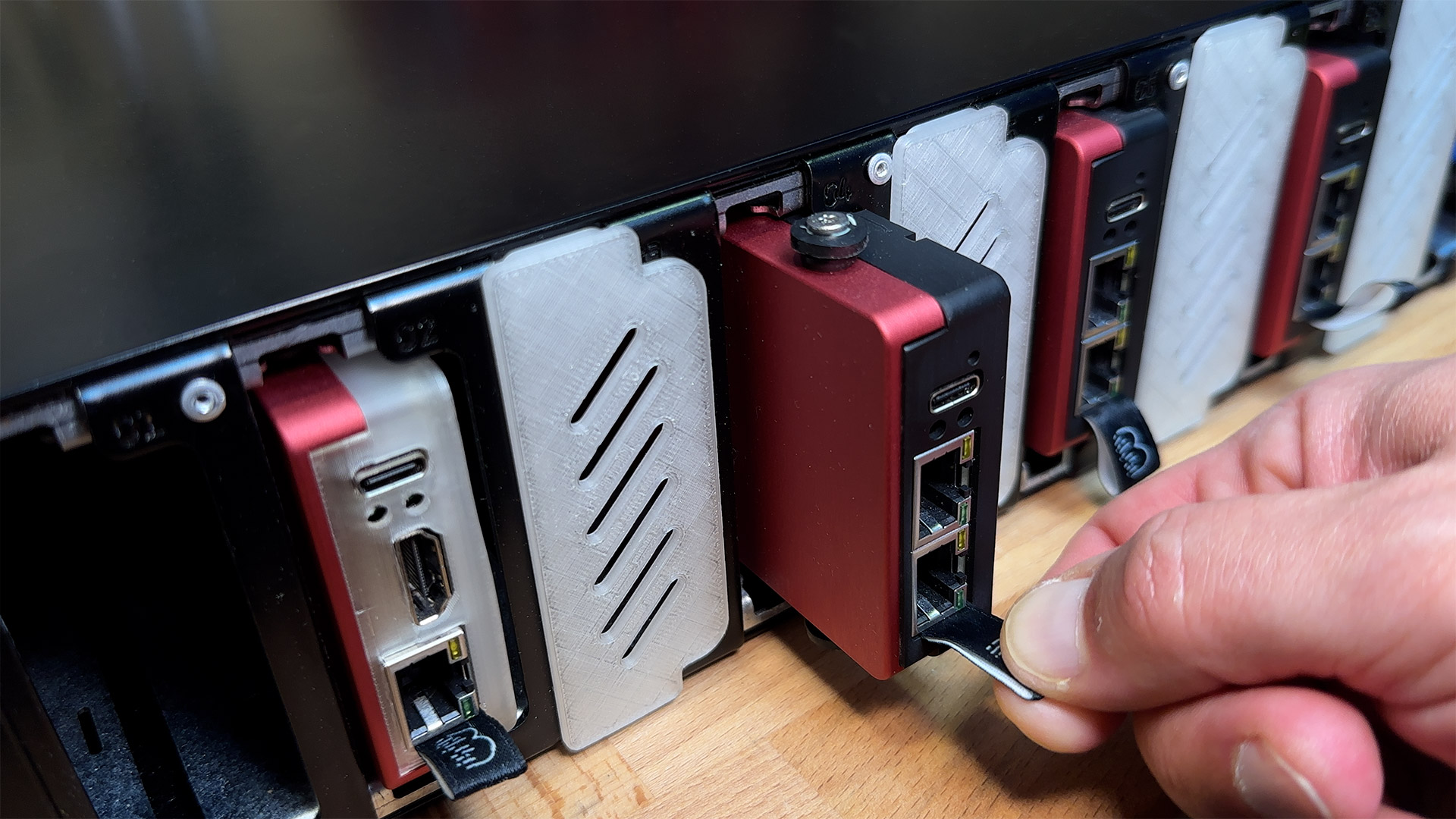
One of the clearest examples was the original node guidance mechanism.
Each node used rubber inserts running inside metallic rails. The concept worked and reliably guided the nodes towards the backplane connector, but after many insertion cycles we began noticing the limitations.
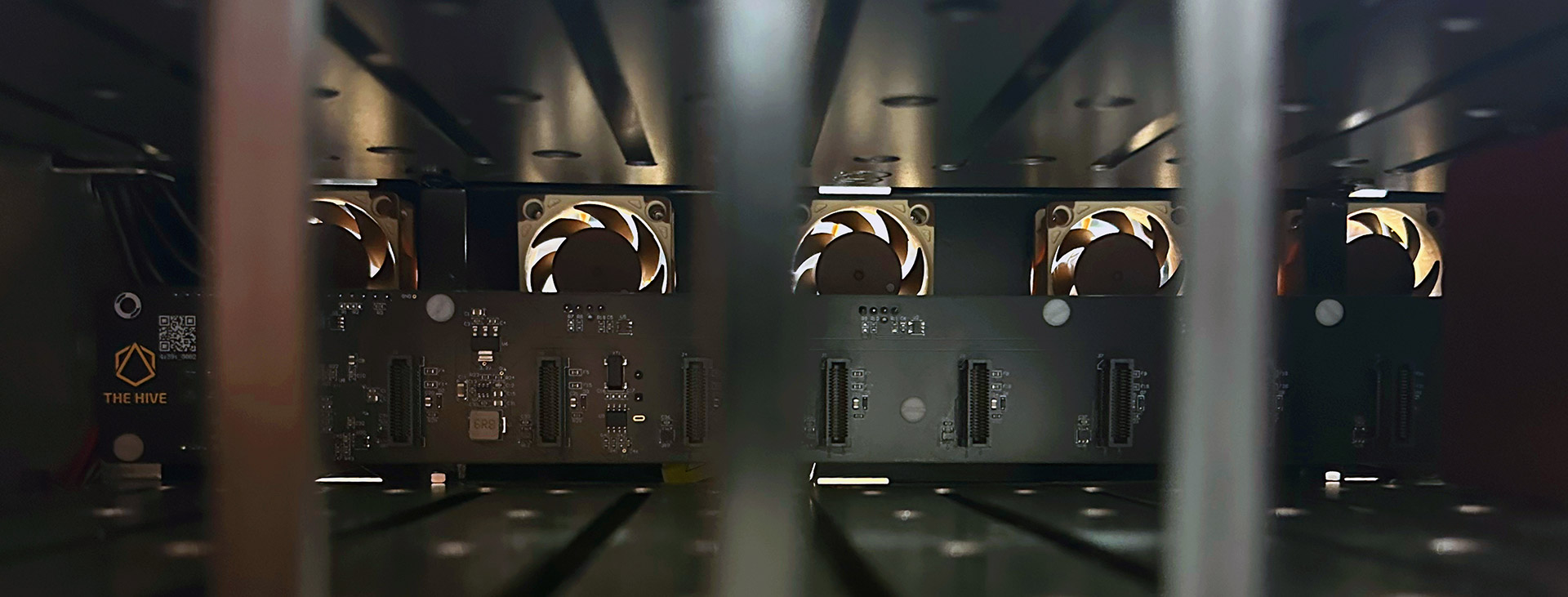
The rubber gradually wore down and, because all four guide points had to engage simultaneously, insertion wasn’t as precise as we wanted.
Reliability was never the issue. The user experience was.
For a hot-swappable system, those details matter. Swapping a node should feel precise, predictable and effortless. That’s something we became much more aware of after seeing people interact with the system over time.
Designing a product goes beyond making it work
The front panel taught us another lesson. We realized that the openings around the nodes exposed more of the internal structure than necessary and made airflow harder to control.
Visually, it still felt like a prototype. And that’s an interesting realization because there is a difference between building something that works and building something that feels finished.
Products communicate through details:
- how they fit together
- how they guide airflow
- how they age
- how they look after a year of use
Those things matter too.
Elegance and simplicity are not always the same thing
The beenode itself taught us perhaps the most important lesson.
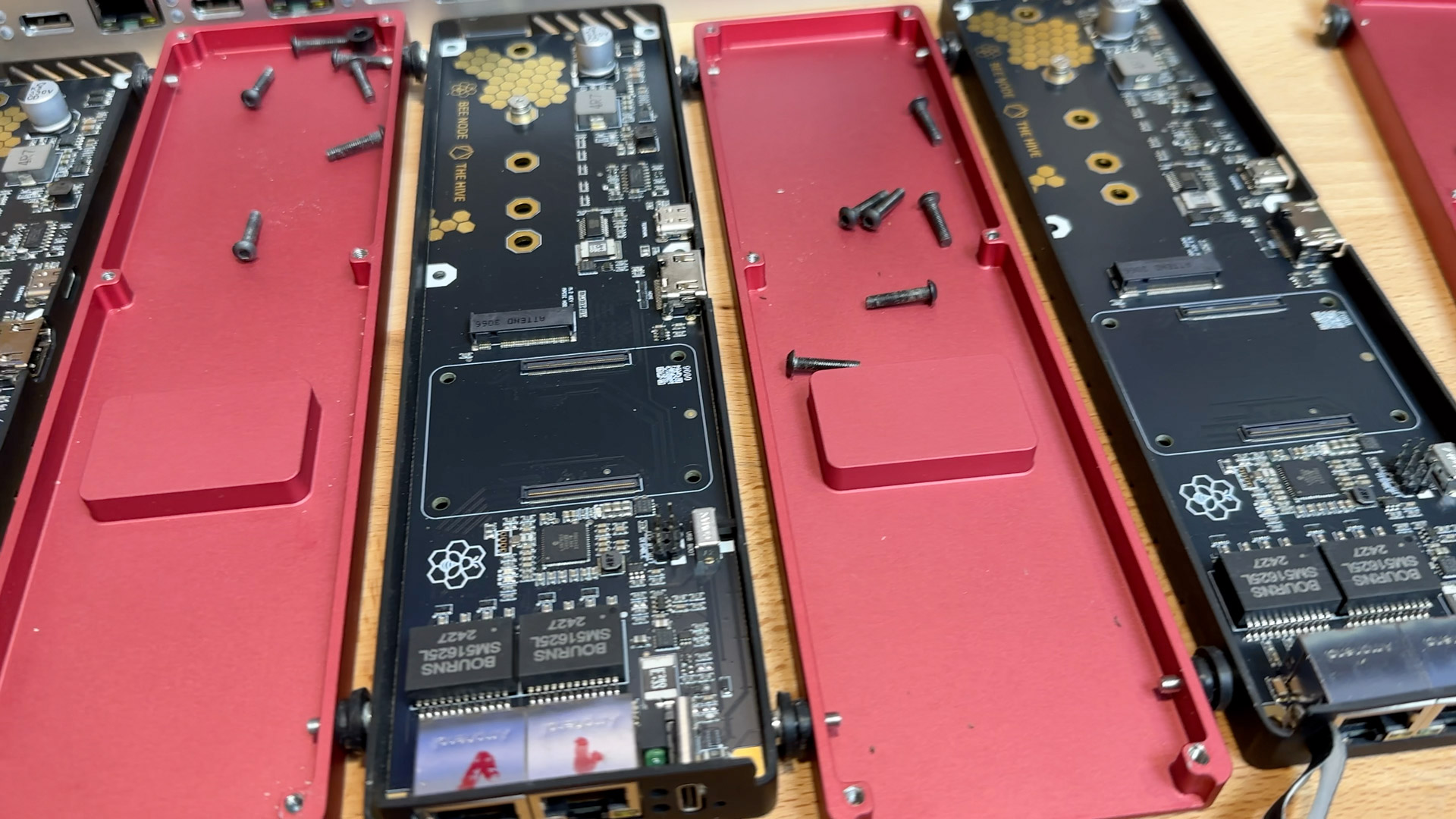
Its enclosure relied on CNC-machined anodized aluminum parts that also participated in cooling by making direct contact with the Compute Module.
At the time, we thought it was an elegant solution. And honestly, it was. But elegance sometimes comes at the cost of complexity.
The design required more assembly steps than we wanted. Manufacturing became more demanding and compatibility became increasingly dependent on the physical characteristics of each Compute module.
Over time, we realized that many of the goals we were trying to achieve could be accomplished with simpler and more robust solutions.
That realization influenced much of the work that followed.
 The biggest lesson: simplify
If we had to summarize everything this prototype taught us in one word, it would be simplicity.
Not because the design was wrong. Quite the opposite. This machine did exactly what it was supposed to do.
Building a Raspberry Pi cluster taught us that product design matters
It validated the architecture, supported real workloads and proved that the concept deserved to continue.
But once the foundation was validated, we could focus on everything else:
- reducing complexity
- improving manufacturability
- making assembly easier
- increasing precision
- creating a better experience
And introducing something that was missing from that generation of the system: true modularity.
From a Raspberry Pi cluster to Hive
When we started this journey, Hive didn’t exist.
What existed was a distributed computing platform built around Raspberry Pi Compute Modules.
That idea evolved into something much bigger:
- hardware design evolved
- electronics evolved
- software stack evolved
- management platform evolved
Many of the lessons learned from this prototype influenced what we now call Hive.
This article focused mainly on the mechanical side of that story, but development never stopped in the other layers of the platform either.
And that’s precisely why we enjoy sharing this process in public. Because Hive isn’t a product that suddenly appeared one day.
It’s the result of years of iteration, testing and lessons learned.
And we’re still learning.
Follow the journey
We’re documenting that journey as openly as possible.
Through videos, articles and development updates, we’re sharing not only what works, but also the decisions, trade-offs and lessons that shape the project.
If you’d like to follow the development of Hive and see where these lessons lead next, you can join the mailing list and become part of the early community.
And if you enjoy seeing how products evolve from ideas into real systems, consider subscribing to our YouTube channel and following the project.
We’re building Hive in public, and we’re just getting started.
Hive is launching on Kickstarter. Are you in?
Get on the early bird list and get exclusive access before anyone else
You’ll receive a confirmation email. Please check your spam folder if you don’t see it.
What you’ll get: project updates as we build – launch alert the moment it’s live – your exclusive early bird link. No spam. Leave anytime.