

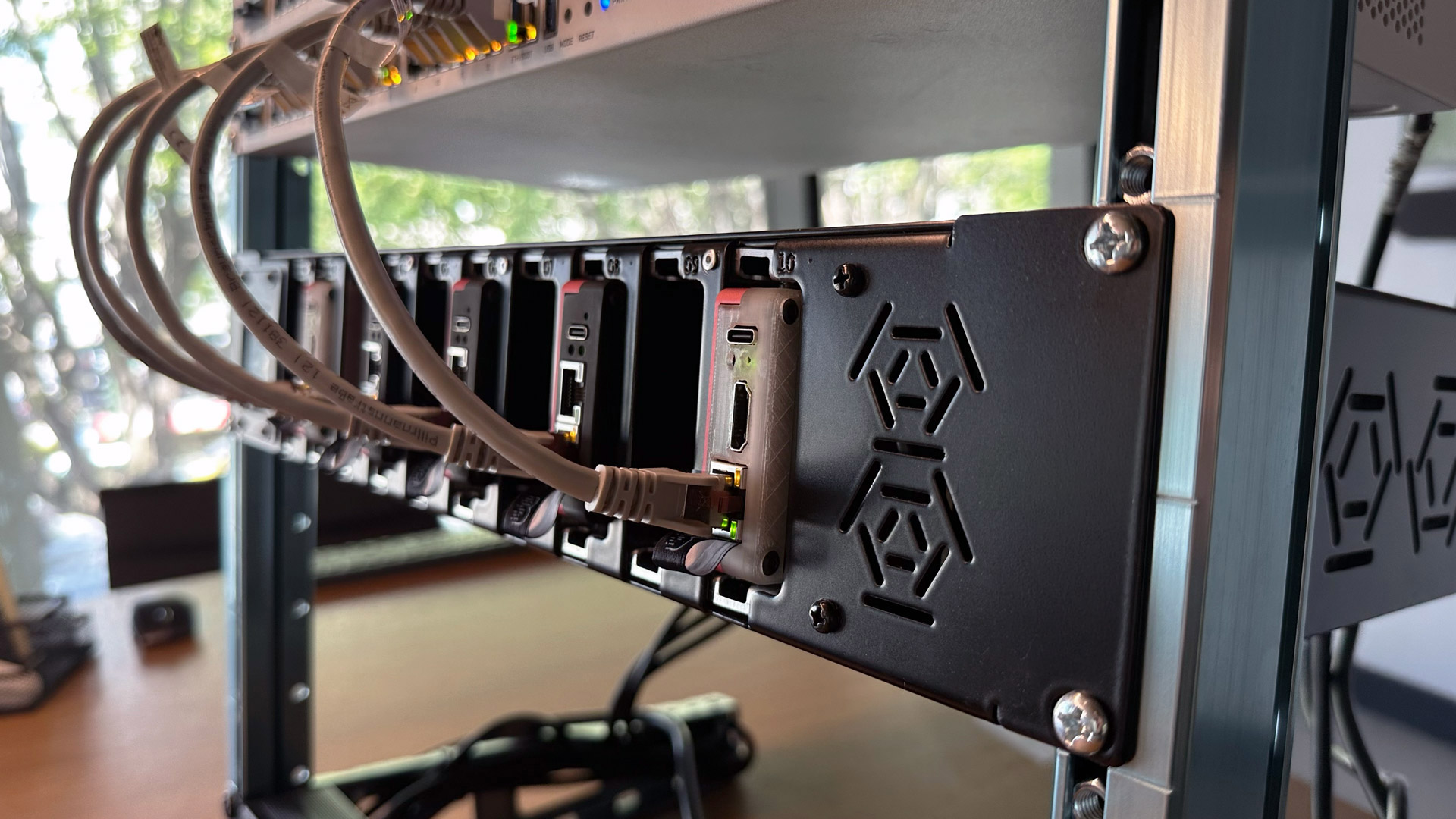
The problem with most Raspberry Pi clusters
Over the last decade, Raspberry Pi clusters have evolved from educational experiments into genuinely useful platforms. What began as a way to learn about distributed systems or parallel computing is now being used to run real workloads. Modern Raspberry Pi hardware, combined with mature software ecosystems, allows clusters to host containerized applications, Kubernetes deployments, CI/CD pipelines, monitoring systems, private cloud services and a growing range of edge computing workloads.
Raspberry Pi clusters are easier to build than ever
The arrival of Raspberry Pi Compute Module 5 has accelerated that trend even further. With improved performance, NVMe storage support and a platform designed specifically for embedded and industrial applications, ARM-based infrastructure is more capable than it has ever been.
Source: Why would you build a Raspberry Pi cluster by Jeff Geerling
As a result, building a cluster today is remarkably straightforward. Hardware is readily available, software tooling is mature and the community has produced an enormous amount of documentation, tutorials and open-source projects.
The challenge, however, is no longer building a cluster. It’s what happens once it becomes useful.
Recommended reading: Five years of Raspberry Pi clusters by Alex Ellis
What is a Raspberry Pi cluster actually for?
Before discussing the limitations of many cluster designs, it is worth considering why people build them in the first place. At its core, a cluster is simply a collection of independent computers working together as a larger system. Instead of concentrating all workloads on a single machine, compute resources can be distributed across multiple nodes, making it easier to separate services, experiment with orchestration platforms and design more resilient infrastructure.
Recommended reading: How to build a Raspberry Pi cluster
For homelab enthusiasts, clusters are often used as learning environments. They provide an excellent way to understand container orchestration, distributed applications and modern infrastructure practices.
For developers and IT professionals, the appeal is often different. Clusters become platforms for self-hosting services, testing deployment strategies, running CI/CD workloads, hosting private cloud environments or deploying applications closer to where they are needed.
In both cases, the attraction is rarely raw performance alone.
What makes clusters interesting is flexibility. They allow infrastructure to grow gradually, evolve over time and adapt to changing requirements without depending on a single machine. That flexibility is precisely what makes their long-term design so important.
Recommended reading: Turn your Raspberry Pi into a Mini-supercomputer
Building a cluster is easy. Operating one is harder.
The Raspberry Pi community has created some remarkably creative cluster designs. There are compact desktop systems, custom 3D-printed enclosures, mini rack installations and highly sophisticated builds that combine carrier boards, NVMe storage, networking equipment and custom power solutions into surprisingly capable platforms.
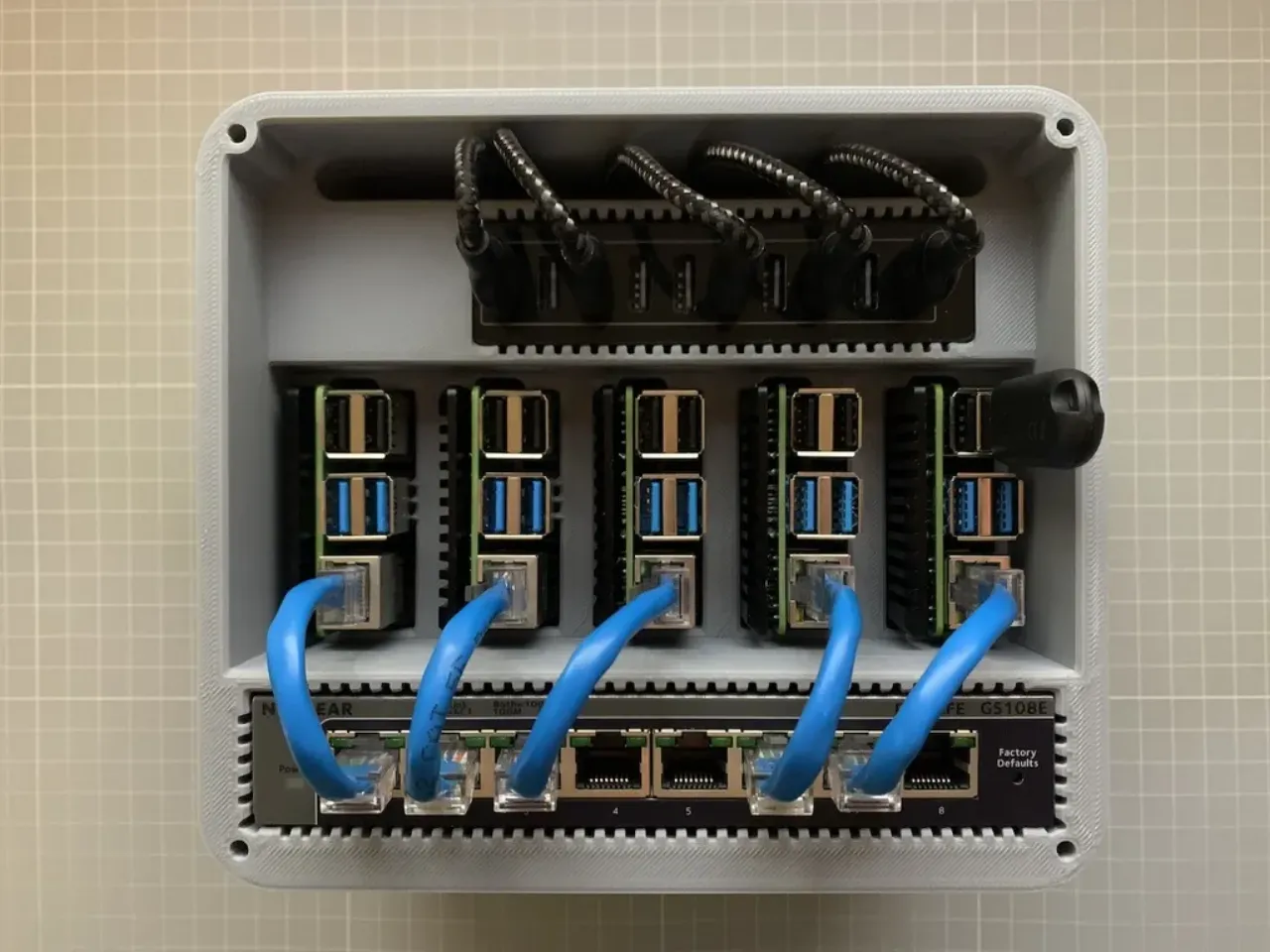
3d printed Raspberry Pi 4 cluster case by JP_156503 on Printables
Many of these projects are technically impressive and achieve exactly what they set out to do. Yet after spending enough time around clustered ARM environments, a common pattern begins to emerge.
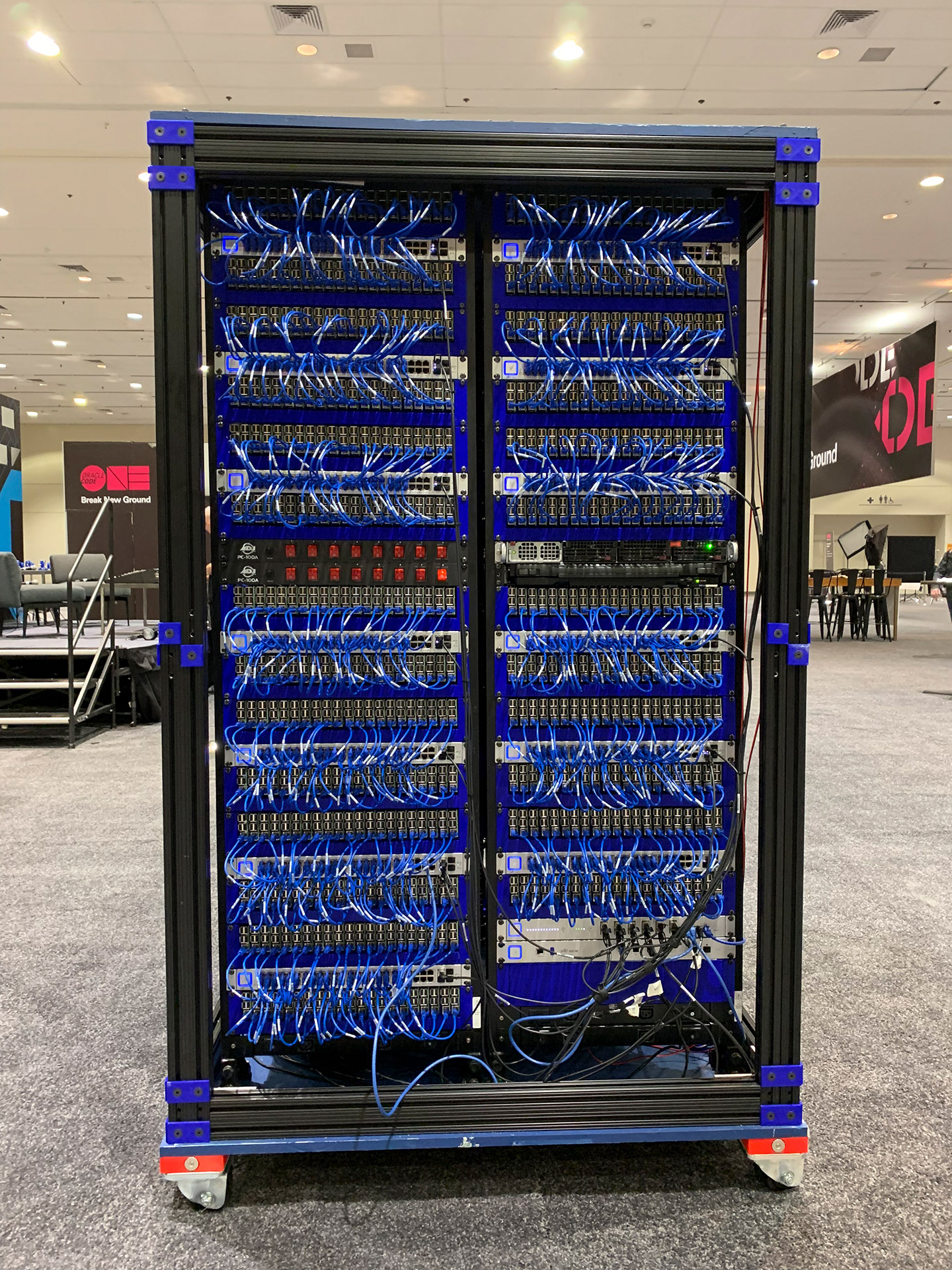
Oracle’s 1050-node Raspberry Pi cluster. Source GitHub
Most Raspberry Pi clusters are designed around the process of assembly. Much less attention is usually given to what happens months or years later when the system requires maintenance, expansion or troubleshooting.
Those two perspectives often lead to very different design decisions. A cluster that is easy to build is not necessarily easy to operate. Likewise, a cluster that looks clean and organized on the day it is assembled may become increasingly difficult to manage as storage, networking and services grow more complex.
This distinction becomes increasingly important as clusters move beyond experimentation and start supporting workloads that people rely on every day.
The maintenance problem
One of the most common transitions in any homelab is the moment when a project stops being a project.
A cluster that initially exists to learn Kubernetes might gradually become the platform hosting backups, monitoring systems, VPN services, media libraries or internal development tools.
What begins as an experiment often becomes part of the infrastructure itself.
Recommended reading: Everything I know about Kubernetes I learned from a cluster of Raspberry Pis by Jeff Geerling
At that point, maintainability becomes just as important as functionality. Replacing a failed node should be straightforward. Storage should be accessible. Power distribution should remain predictable as the system grows. Identifying hardware issues should not require tracing a maze of cables or dismantling large portions of the cluster.
Unfortunately, many DIY cluster architectures accumulate complexity over time.
Additional SSDs are attached externally. Power supplies multiply. Networking becomes harder to document.
Expanding the system introduces inconsistencies between older and newer nodes. None of these issues are catastrophic on their own, but together they create friction that gradually increases the operational cost of maintaining the platform.
For small clusters this may be manageable. For systems that become central to a homelab or deployment environment, it often becomes the limiting factor.
What happens when a cluster becomes useful
Most cluster guides focus on the initial build process. Far fewer discuss what happens after months or years of continuous operation.
Infrastructure tends to evolve in small increments. A cluster may begin by hosting a few containers and gradually accumulate additional services as confidence in the platform grows.
New workloads appear, storage requirements increase and uptime becomes more important.
Eventually, the questions being asked change.
The focus shifts away from whether the system can run a particular workload and towards whether the infrastructure itself can be maintained efficiently.
- Can a node be replaced without disrupting the rest of the environment?
- Can compute capacity be expanded without redesigning the architecture?
- Can the physical system remain organized as it scales?
These are the kinds of questions that become increasingly important once a cluster transitions from experimentation to everyday use.
Interestingly, they are often the same questions that have shaped enterprise infrastructure design for decades.

Source: Setting up a Raspberry Pi cluster
Infrastructure should scale without becoming harder to manage
One of the defining characteristics of well-designed infrastructure is that growth does not automatically result in complexity.
Adding capacity should be predictable. Maintenance should follow repeatable processes. Replacing hardware should not require extensive reconfiguration. The physical architecture of the system should support long-term operation rather than simply enabling initial deployment.
This is one of the reasons enterprise hardware evolved around modular architectures, integrated power systems, serviceable components and hot-swappable hardware.
These features are not primarily about performance. They exist because they reduce operational friction.
While homelabs and small ARM clusters operate at a completely different scale, many of the underlying principles remain remarkably similar. The challenges associated with maintenance, upgrades and long-term management do not disappear simply because the hardware is smaller or more affordable.
In many ways, they become even more visible.
The missing layer
The Raspberry Pi ecosystem has matured enormously over the last few years. Modern hardware platforms offer impressive compute density, flexible storage options and excellent software compatibility, while the surrounding community continues to produce tools, documentation and projects at an extraordinary pace.
What still feels underdeveloped, however, is the layer between individual boards and long-term infrastructure.
The layer concerned with serviceability, modularity and operational simplicity.
The layer that asks what happens after the cluster is built.
>How should nodes be replaced? How should systems expand? How should power, storage and compute be organized so that the platform remains maintainable as it grows?
These questions became increasingly important to us as we worked with ARM infrastructure and clustered computing environments.
Eventually, they led us to start building Hive.
Hive is our attempt to approach ARM infrastructure as a complete system rather than a collection of independent components. Hot-swappable bee nodes, a shared backplane architecture and a modular ecosystem are all consequences of that thinking.
If you’d like to understand the reasoning behind the project in more detail, we’ve written about it here:
→ Why we’re building Hive
Follow the project
Hive is currently in development ahead of its Kickstarter launch.
Over the coming months we’ll be sharing engineering updates, prototype iterations, hardware development, infrastructure experiments and behind-the-scenes insights into how the platform is evolving. If you’re interested in self-hosting, homelabs, distributed systems or modular ARM infrastructure, you can follow the project and join the early-bird list at:
→ hive.blackdevice.com
You’ll receive occasional updates when there is something meaningful to share, including major development milestones and launch announcements.
No spam. Just real progress as we build.

Hive is launching on Kickstarter. Are you in?
Get on the early bird list and get exclusive access before anyone else
You’ll receive a confirmation email. Please check your spam folder if you don’t see it.
What you’ll get: project updates as we build – launch alert the moment it’s live – your exclusive early bird link. No spam. Leave anytime.