

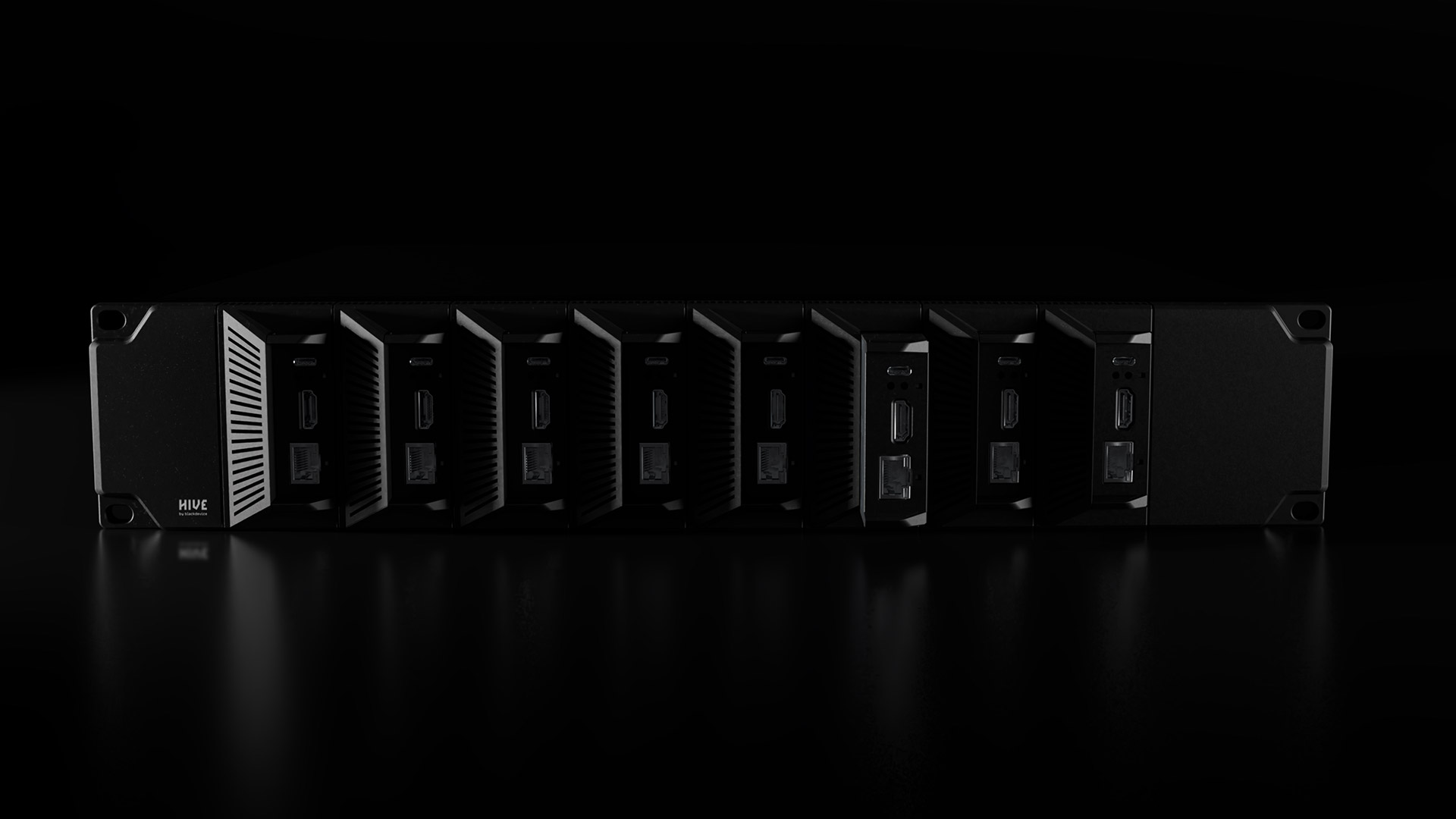
We’re building Hive. And we’re taking it to Kickstarter
We’ve been building Hive for a long time.
Quietly, internally, the way hardware projects usually evolve when the goal is to build something real: PCB revisions, failed prototypes, mechanical redesigns, thermal testing, back-and-forth iterations and long stretches where progress is invisible from the outside.
That process takes time. Especially when the intention is not to ship a quick prototype, but to build infrastructure people can actually rely on.
And now, for the first time, we’re ready to start showing it properly.
Hive is a modular ARM compute system built around Raspberry Pi CM5, designed for homelabs, self-hosting, edge deployments and low-power infrastructure. And later this year, we’ll be launching it on Kickstarter.
What Hive actually is
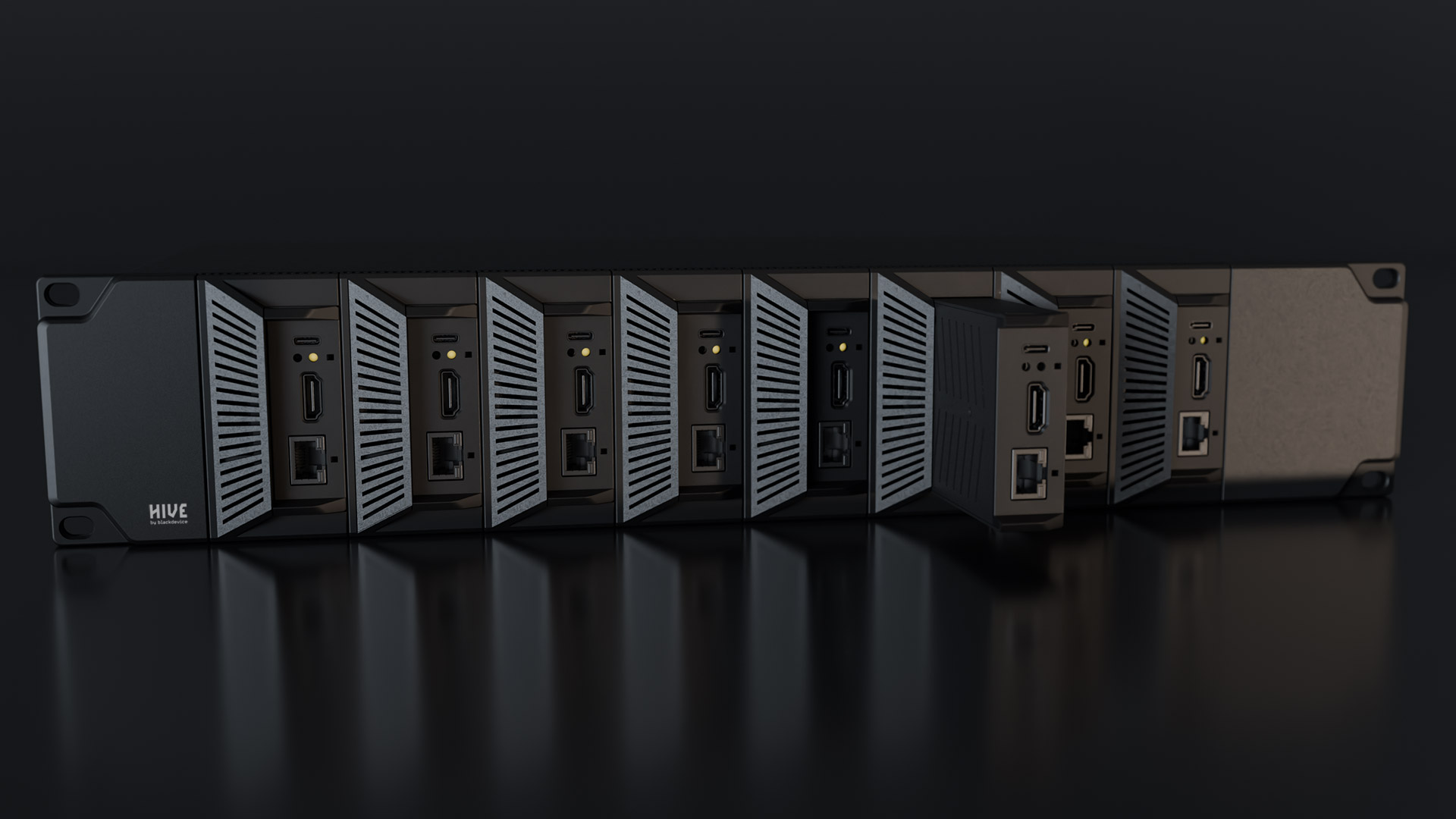
Hive is built around modular hot-swappable compute nodes we call beenodes.
Each node runs its own Raspberry Pi CM5 and slots directly into a shared backplane system that handles power and connectivity across the chassis. Instead of assembling independent boards, cables and adapters into a cluster, Hive is designed as a single modular infrastructure platform from the beginning.
The system comes in two formats:
- Hive Mini, a compact four-node system designed for homelabs, self-hosting and experimentation.
- Hive, an eight-node 2U rack-mounted platform for larger deployments and more serious infrastructure workloads.
Both share the same beenode ecosystem. A node used in Hive Mini can later move directly into the full rack-mounted Hive without replacing anything. The infrastructure scales with the user instead of forcing hardware resets every time requirements change.
If you want the deeper story behind why we started building Hive — and the infrastructure problems we think still haven’t been solved properly — we’ve written about it in detail here:
→ Read: “Why we’re building Hive”
Why we’re finally talking about it now
A lot of hardware projects become public very early. Sometimes too early. A render appears online, a campaign launches, and the engineering work still has to catch up afterwards.
We wanted to avoid that completely.
Hive has been evolving internally for years through PCB revisions, mechanical redesigns, prototyping and real-world testing. The system already exists as working hardware, and early versions have already been deployed internally through ipglobal’s infrastructure team. Not as demos — as operational systems running real workloads.
That process taught us something important very early:
- the difficult part is not making a prototype work once
- The difficult part is designing infrastructure that remains maintainable, modular and reliable over time.
That’s the standard we’ve been building towards from the beginning.

What happens next
Between now and the Kickstarter launch, we’ll be documenting the project as it evolves. Not only the polished version. The real process behind building modular hardware.
That includes:
- PCB assembly and validation
- chassis prototyping
- thermal testing
- firmware development
- backplane iterations
- hot-swap testing under load
- rack integration
- production challenges
- and the hundreds of small engineering decisions that shape a system like this
We’ll also be sharing the people behind the project. Engineers developing the beenode hardware. Firmware and software developers working on the platform.
Industrial designers at Weetbe who created the modular rail system. Manufacturing and prototyping process as it moves forward.
And most importantly: we’ll be showing what Hive is actually capable of running.
- Kubernetes clusters on CM5
- Self-hosted infrastructure
- Distributed CI/CD workloads
- Private cloud environments
- Monitoring systems
- Edge deployments
- Local AI inference
- Real infrastructure workloads running on modular ARM hardware.
Some of these moments only happen once:
- the first complete rack assembly
- the first full-system power-on
- the first hot-swap under load
- the first production-ready prototypes
We intend to document all of it.
Follow the project
Everything related to Hive will be published here as development continues:
engineering updates, hardware progress, design decisions, infrastructure experiments and behind-the-scenes content from the build process.
The more visual side of the project will also live across LinkedIn, Instagram, TikTok and YouTube as prototypes evolve and the system gets closer to launch.
And if you want to be there when Hive launches on Kickstarter, the best place to follow the project is the early-bird list.
We’ll use it to share:
- major development updates
- launch announcements
- prototype milestones
- and early access when the Kickstarter campaign goes live
No spam. No fake countdowns. Just real progress as we build.
→ Join the early-bird list at hive.blackdevice.com
Every bee node counts. Welcome to the Hive.
Hive is launching on Kickstarter. Are you in?
Get on the early bird list and get exclusive access before anyone else
You’ll receive a confirmation email. Please check your spam folder if you don’t see it.
What you’ll get: project updates as we build – launch alert the moment it’s live – your exclusive early bird link. No spam. Leave anytime.